In the first quarter of 2026, Hinde Group's investment portfolio demonstrated remarkable resilience, outperforming the S&P 500 amidst a period of intense market turbulence. This quarter was characterized by two major disruptive forces: the 'SaaS-pocalypse,' triggered by advancements in AI coding, and geopolitical instability stemming from a military campaign in the Middle East. Despite these challenges, the firm's strategic investments in companies such as Interactive Brokers, Northeast Bank, and Becton Dickinson yielded significant positive contributions, while meticulous portfolio adjustments helped navigate the shifting economic landscape.
Detailed Report on Hinde Group's Q1 2026 Market Activities
In the initial months of 2026, global financial markets encountered substantial volatility due to a confluence of technological advancements and geopolitical events. The period commenced with what has been termed the 'SaaS-pocalypse,' following the release of Anthropic's Opus 4.5 AI model on November 24, 2025. This revolutionary model, showcasing unparalleled capabilities in agentic coding, ignited investor concerns regarding the future of software-as-a-service (SaaS) business models. Fears arose that sophisticated AI agents could enable enterprises to develop in-house software solutions, potentially displacing traditional SaaS vendors. Moreover, new startups might offer simplified services at significantly reduced prices, pressuring existing SaaS companies to lower their pricing and reduce 'seat' allocations, thereby impacting profitability. These anxieties led to a notable decline in publicly traded SaaS stocks and a cautious sentiment towards related credit instruments and funds.
As February drew to a close, market attention shifted dramatically to 'Operation Epic Fury,' a military campaign initiated by the U.S. and Israel against Iran on February 28, 2026. This conflict immediately sparked a sharp increase in financial market instability. Brent Crude oil prices surged by nearly 10% upon market opening after the initial strikes, concluding the quarter at an astonishing $126.69 per barrel, marking over a 100% increase from its starting point. Concurrently, the S&P 500 experienced a significant downturn throughout March, recording a 5.5% monthly decline and pushing its overall quarterly performance into negative territory. Uncertainty surrounding the conflict's duration and its broad economic implications continued to exert considerable pressure on global financial markets as the quarter concluded.
Amidst these turbulent conditions, Hinde Group's portfolio successfully outpaced the S&P 500. Key holdings such as Interactive Brokers Group, Inc. (IBKR) class A common stock, Northeast Bank (NBN) voting common stock, and Becton, Dickinson and Company (BDX) common stock were instrumental in driving positive returns. Although IBKR saw a modest 4.3% gain for the quarter, the firm strategically trimmed its position early on at higher price points. Northeast Bank achieved an 8.1% gain. The investment in BDX benefited significantly from the successful completion of Becton Dickinson's Reverse Morris Trust transaction with Waters Corporation (WAT). In contrast, Uber Technologies, Inc. (UBER) common stock was the sole notable detractor, experiencing a 12.0% decline during the quarter.
Hinde Group also undertook several strategic portfolio adjustments. An early-quarter decision to trim the IBKR position was made, yet it remains a substantial mid-teens percentage of the portfolio. The firm liquidated Waters Corporation shares obtained from the BDX transaction and exited its residual holding in Sleep Number Corporation (SNBR). Concurrently, positions in Amazon.com, Inc. (AMZN) and Netflix, Inc. (NFLX) common stock were augmented. By quarter-end, the portfolio consisted of seven long equity positions complemented by a cash reserve.
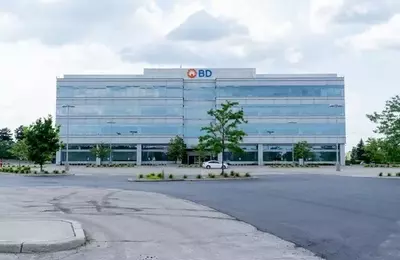
A specific highlight for the quarter was the Becton, Dickinson and Company (BDX) special situation investment, initiated in July 2025. BD, a leading developer and manufacturer of medical supplies and devices, serves a vast array of healthcare clients globally, with 90% of hospital patients encountering at least one of its over 45 billion annual products. Approximately 60% of BD's $18.5 billion revenue originates from the U.S., with a quarter from Europe. The Reverse Morris Trust transaction with Waters Corporation concluded on February 9th, wherein BD spun off its Biosciences & Diagnostics Solutions business, which then merged with Waters Corporation. BD received $4 billion in cash, and its shareholders received 0.135 shares of Waters Corporation common stock for each BDX share held. These WAT shares, valued at $44.86 per BDX share based on WAT's opening price of $332.29 on February 9th, were subsequently sold by Hinde Group. The $4 billion cash inflow enabled BD to repurchase $2 billion in stock and repay $2 billion in debt by the quarter's end. Becton Dickinson projects low single-digit currency-neutral revenue growth for the current fiscal year, with adjusted diluted EPS between $12.52 and $12.72. At the quarter-end closing price of $157.23, BDX presented an 8.0% earnings yield relative to its EPS guidance midpoint. The company is expected to achieve mid-single-digit organic revenue growth annually, with margin expansion driven by 'BD Excellence' initiatives, indicating a promising mid-to-high teens prospective annualized return over the intermediate term. This valuation, particularly considering its predictable, recession-resistant performance, suggests a potential for the stock to exceed $230 per share for a market-level return. Furthermore, BD's commitment to share buybacks at these accretive levels is poised to enhance intrinsic value per share. The primary catalyst for BDX's valuation re-rating will be its consistent achievement of management's organic revenue growth targets, a milestone anticipated by fiscal year-end 2028, with market recognition expected to build between now and the close of 2027.
This period underscores the dynamic interplay of technological innovation and geopolitical realities in shaping investment outcomes. The foresight to anticipate and adapt to these powerful forces remains paramount for sustained success in navigating global financial markets.